
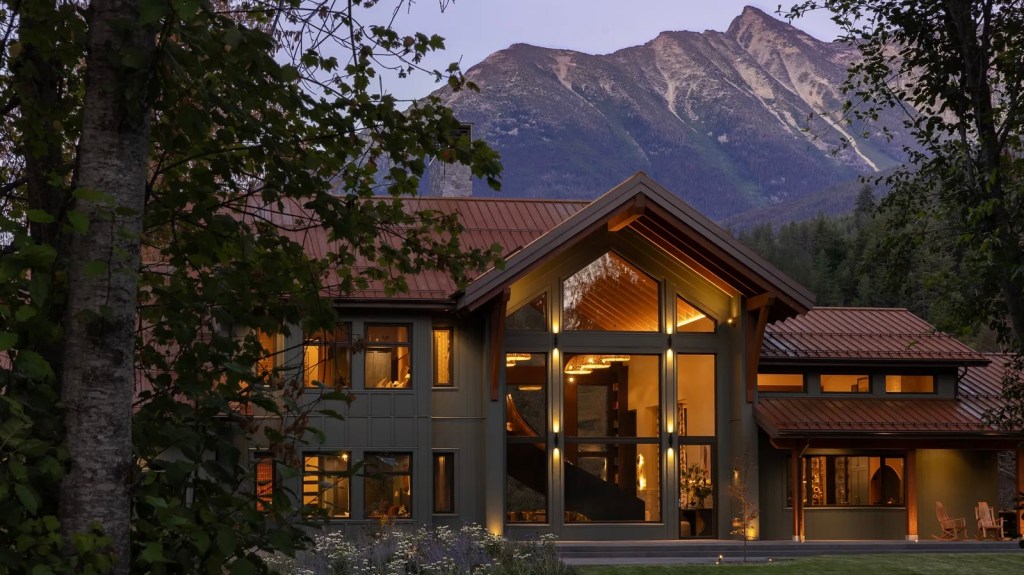
• Architecture & Interior Design Project Feature – 2026 •
Photography by Ema Peter
Words by Himan J.
There is a distinct magic to the Canadian wilderness, where towering evergreens meet deep glacier-fed waters and the light shifts from brilliant gold to moody slate in the span of an afternoon. For her new home in British Columbia, our favourite actress Cobie Smulders wanted a space that didn’t just look out at this landscape, but deeply conversed with it.
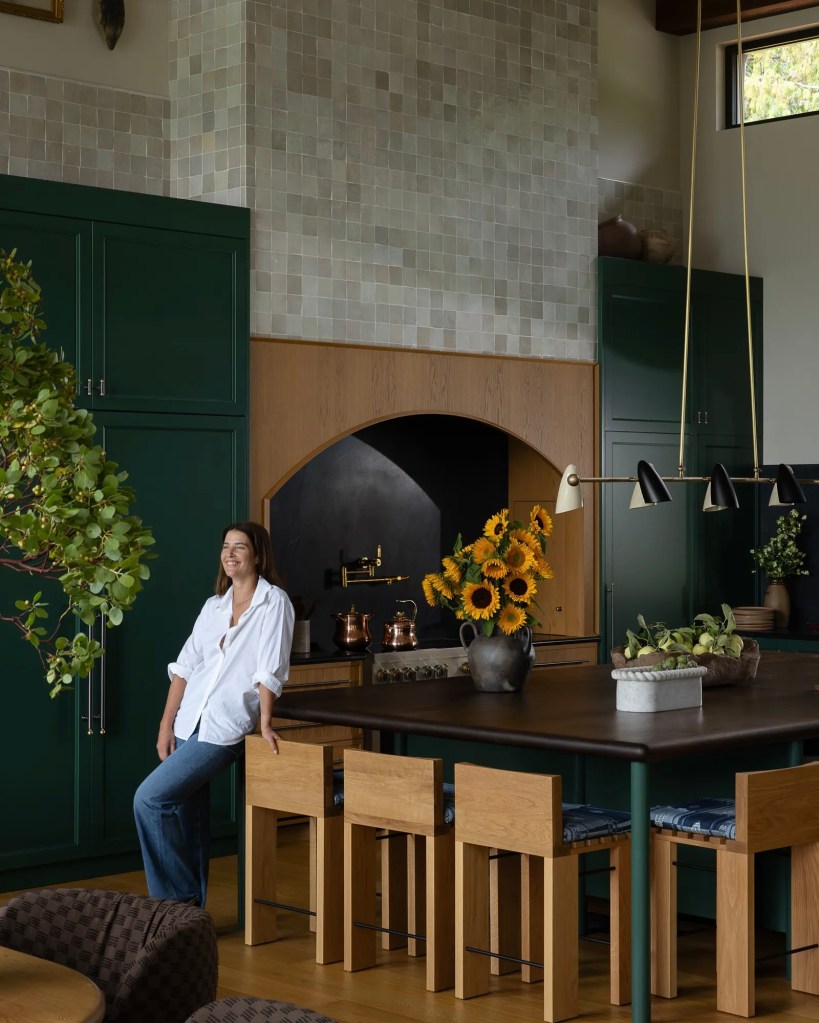
Cobie Smulders stands in her home’s expansive kitchen, a space that acts as the gathering point, a social hub that grounds the entire home by perfectly balancing its grand scale with natural warmth and intimacy.
For Vancouver-born Smulders, this draw of the British Columbia wilderness has been a defining thread of her childhood. Growing up, family getaways to remote island cabins and alpine retreats left an indelible mark. When she and her husband, comedian Taran Killam, finally decided to plant roots in a remote, mountain-ringed parcel of B.C. land facing a private lake, Smulders knew exactly who to call. She reached out to a childhood friend’s mother, celebrated Canadian architect Elizabeth MacKenzie to spearhead a true passion project.
Elizabeth MacKenzie then collaborated with Skladan Architecture, and PlaidFox Studio to make the magic happen, as they took on an expansive, raw piece of the Pacific Northwest landscape and introduced a home that subverts expectations. Captured by architectural photographer Ema Peter, this “family cabin” breaks away from traditional rustic tropes. Instead, it balances grand lakeside architecture with an intimate interior narrative specifically designed to do one thing: host a vibrant, sprawling family.
Architecture Structured for Connection
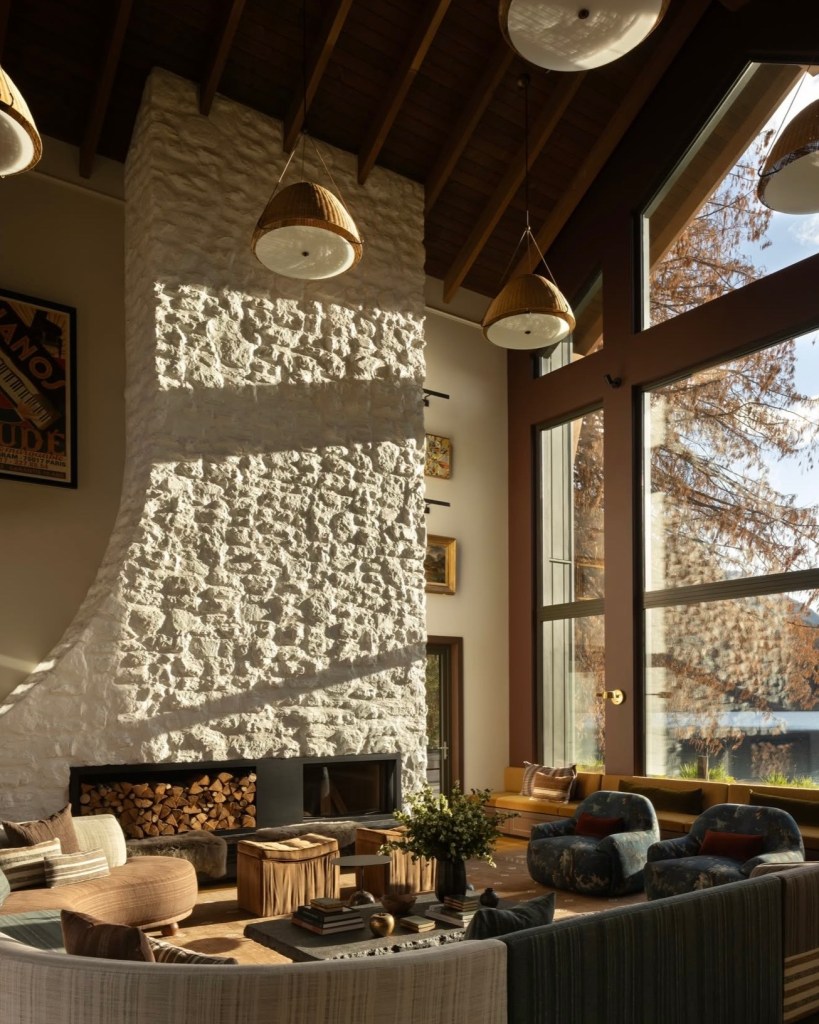
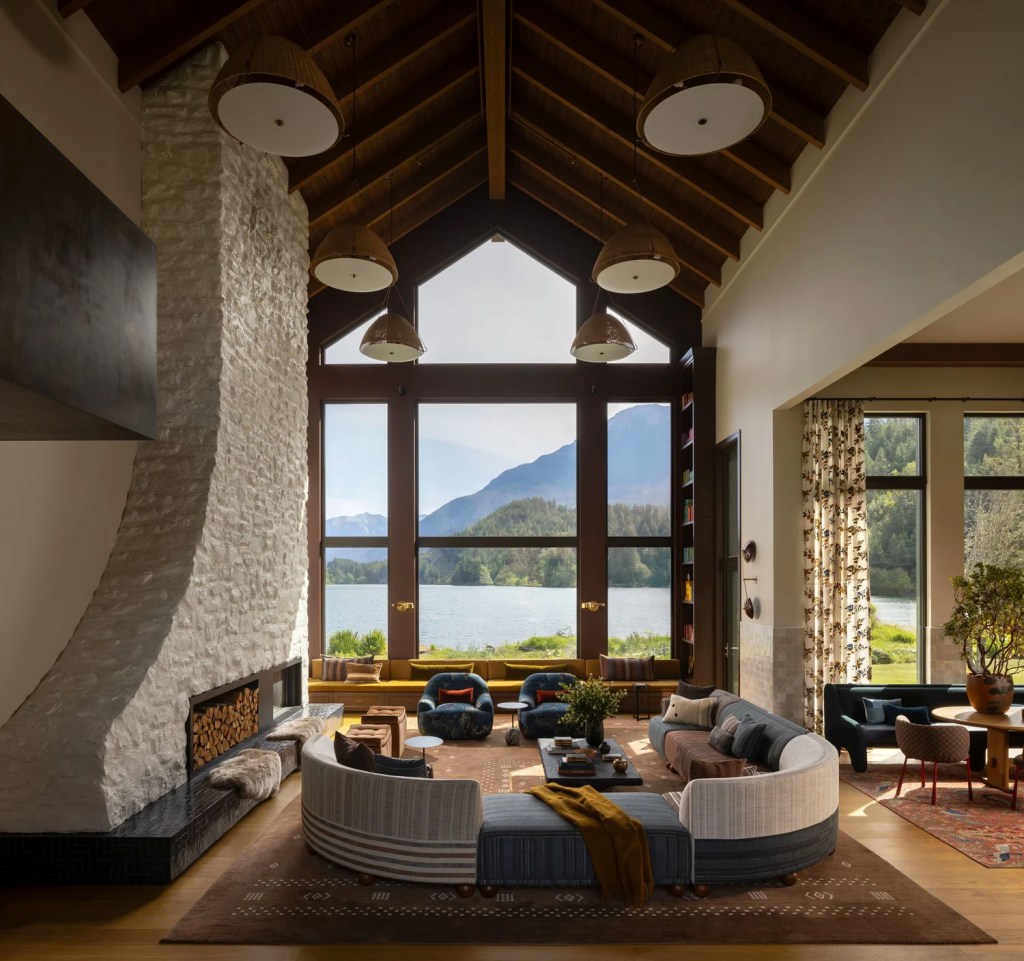
The furniture layout relies on oversized, low-profile modular seating keeping the visual weight low to maximize the sweeping window views
When Smulders set out to build the home, she didn’t just want a private retreat; she envisioned a bustling, lively gathering place capable of hosting immense dinners for up to 27 family members. To achieve this without losing the cozy essence of a wilderness escape, Skladan Architecture and Elizabeth MacKenzie leaned into high-contrast spatial volumes.
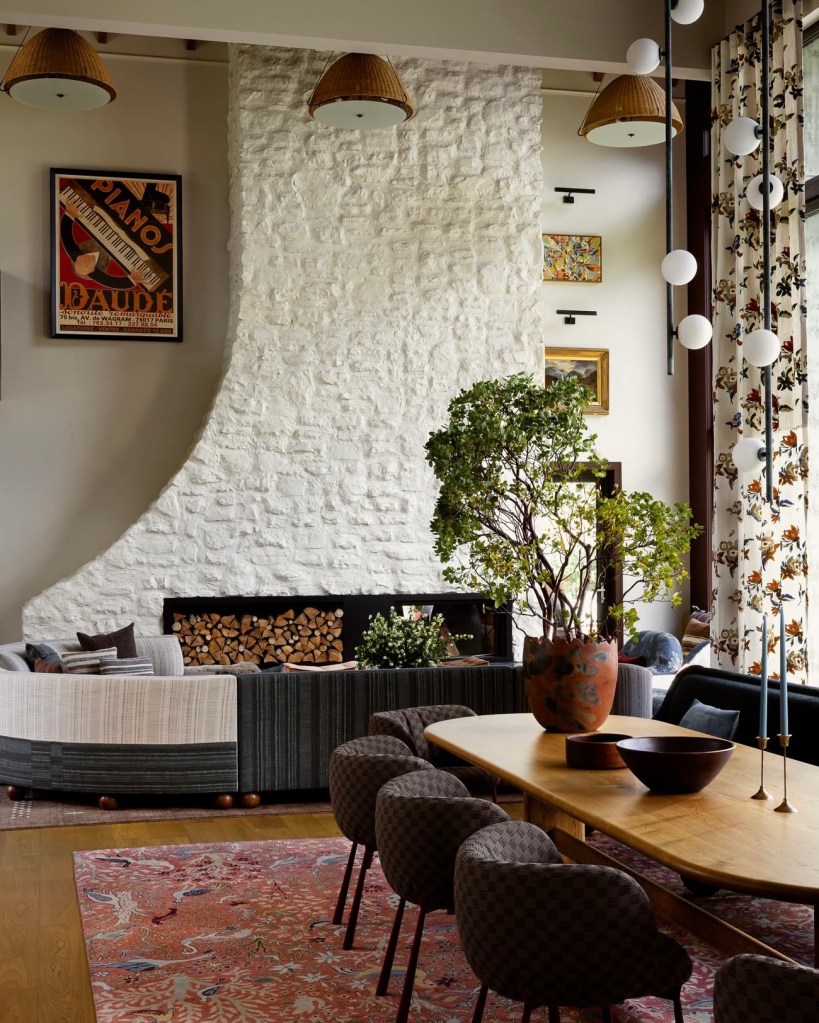
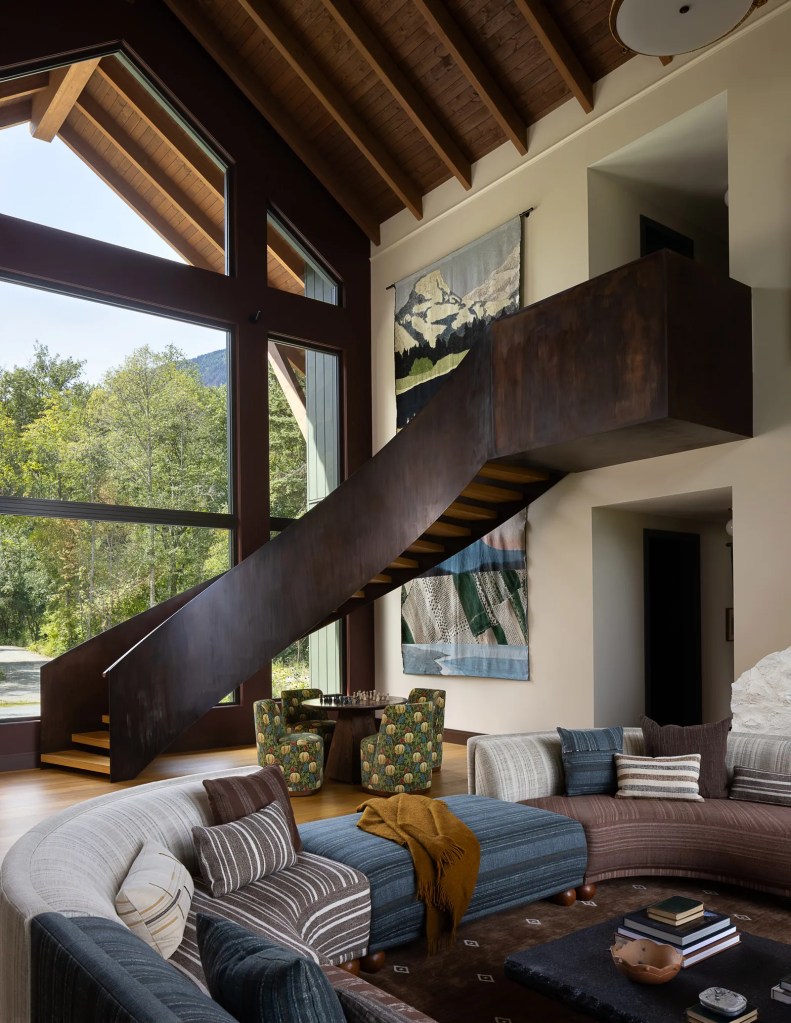
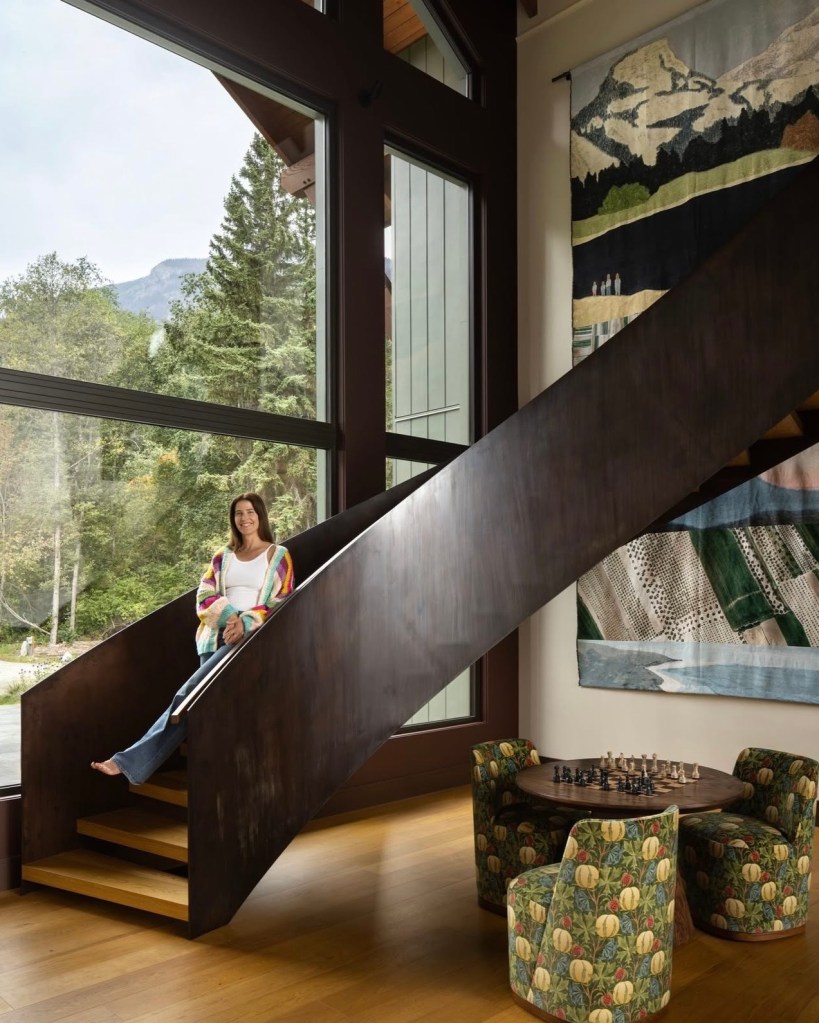
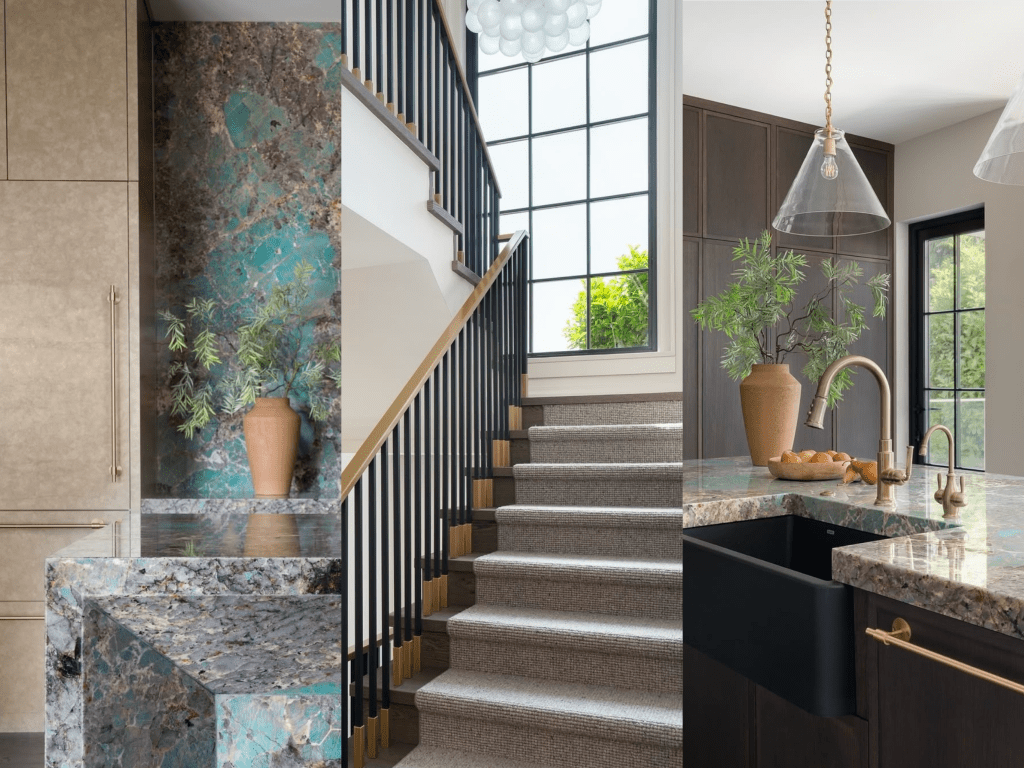
The staircase is an aggressive, beautiful architectural statement. It acts as a grounding anchor against the towering glass windows and the lightness of the walls
The primary pavilion relies on a soaring cathedral roofline. To anchor this immense vertical space, the design introduces a striking, sculptural staircase. Clad entirely in raw, dark patinated steel, its heavy industrial geometry cuts sharply through the light-filled room like a monolithic blade. By avoiding a traditional wood staircase, the designers created a structural centerpiece that balances the vastness of the black-framed glass curtain walls framing the lake.
Unexpected Textures and Secret Maximalism
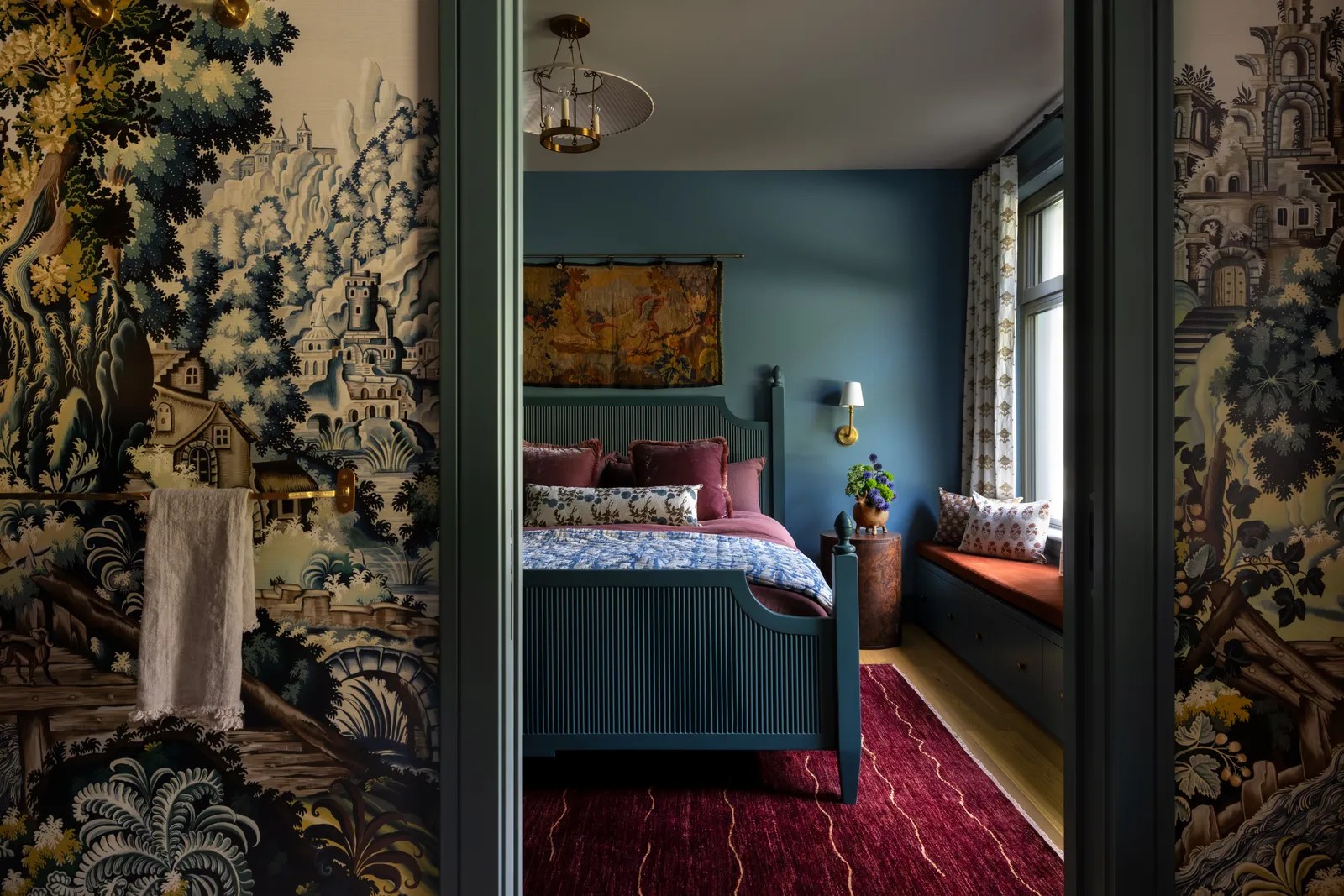
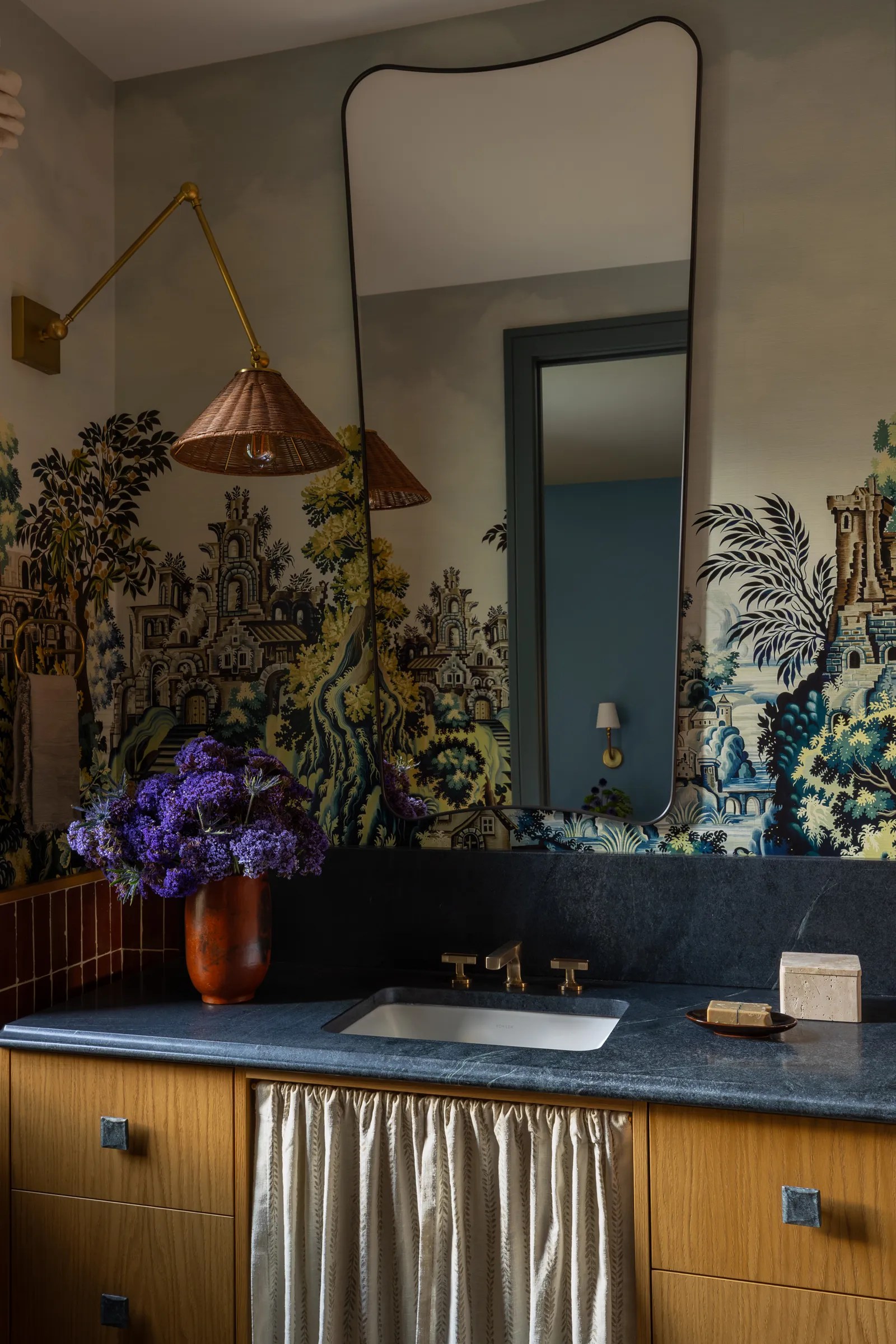
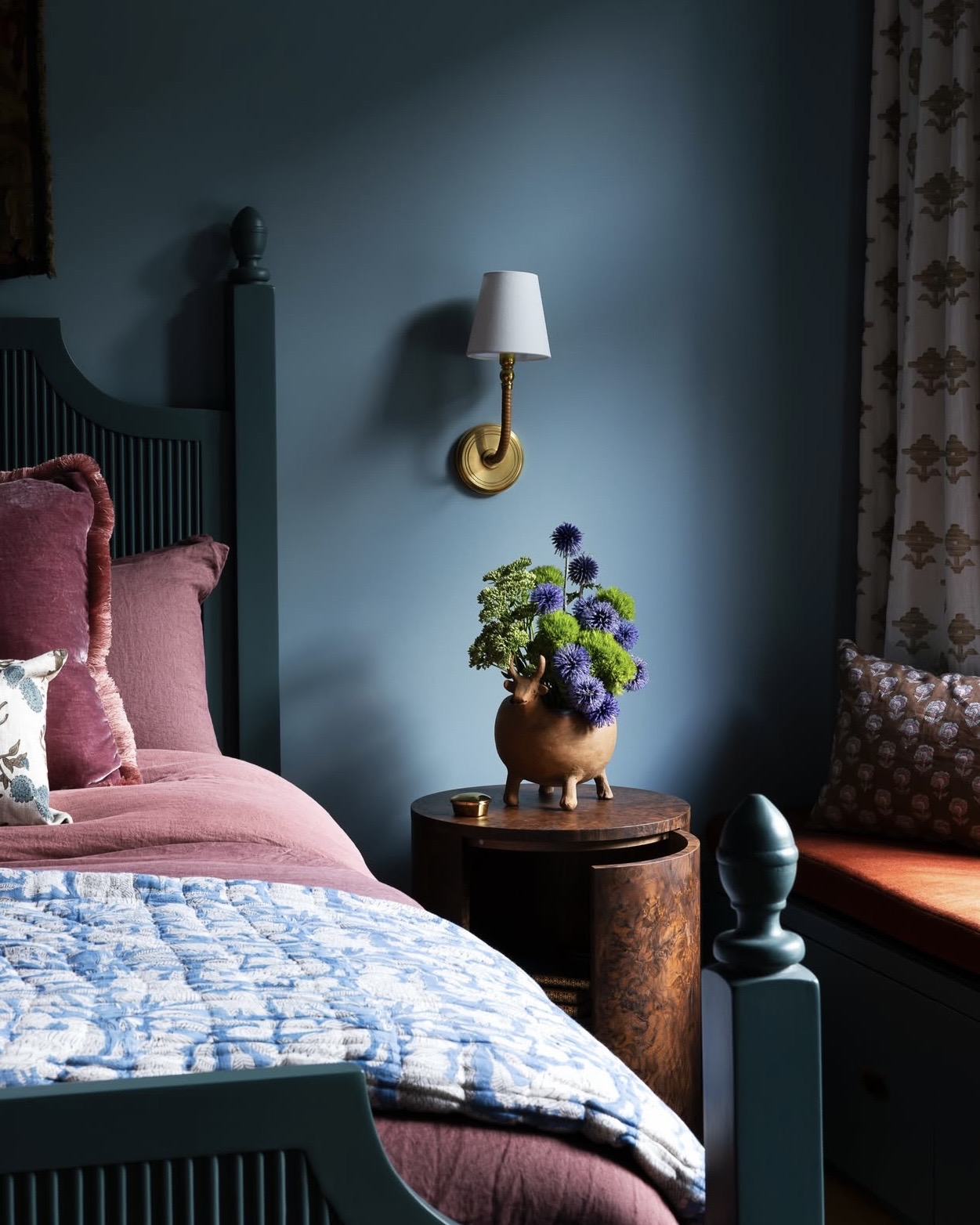
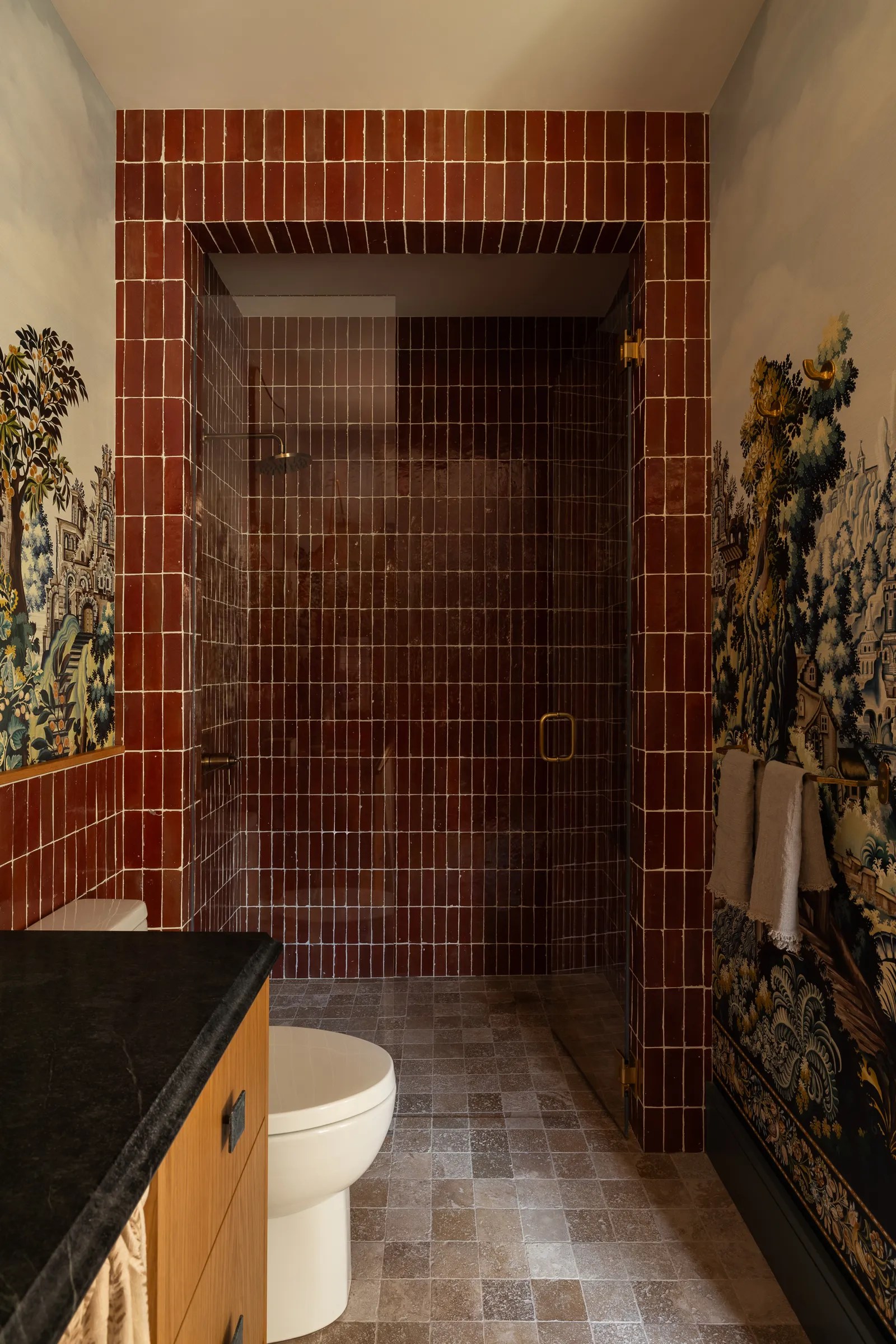
While the structural envelope is rooted in timeless West Coast architecture, PlaidFox Studio used the interiors to weave in layers of playfulness, history, and tailored color palettes. The design avoids the predictable neutrals of typical lake houses, opting instead for deep, saturated jewel tones inspired by the B.C. landscape.
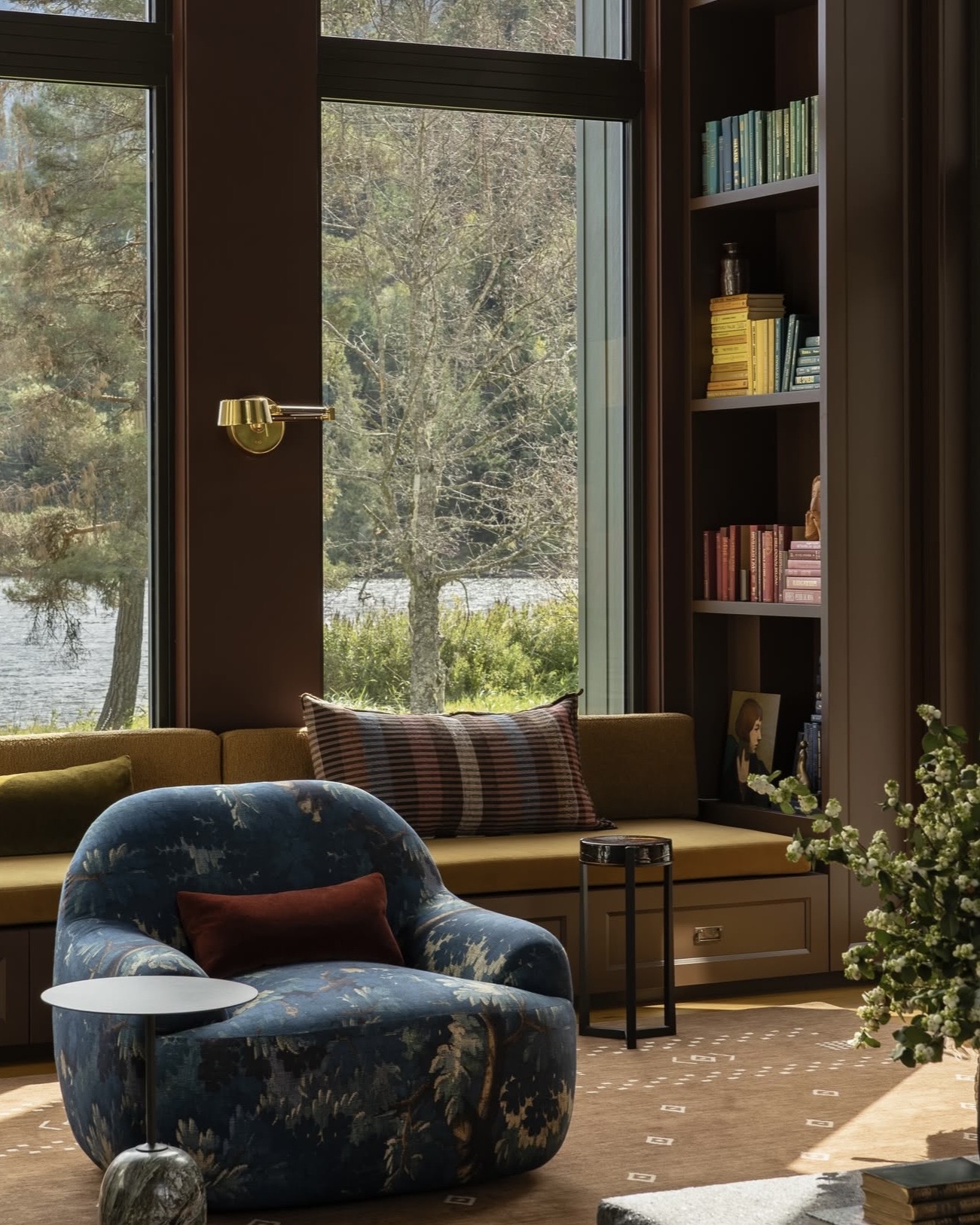
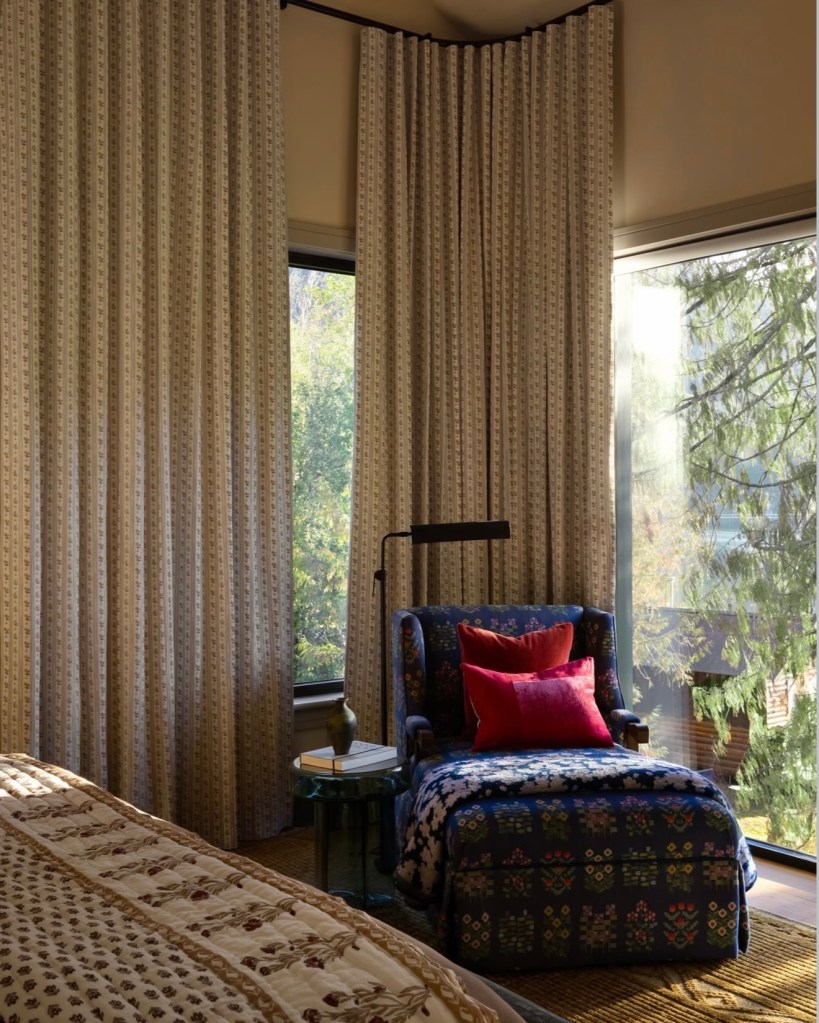
Blue tapestry club chairs anchor the sun-drenched reading nook, echoing the natural lakeside landscape just beyond the glass
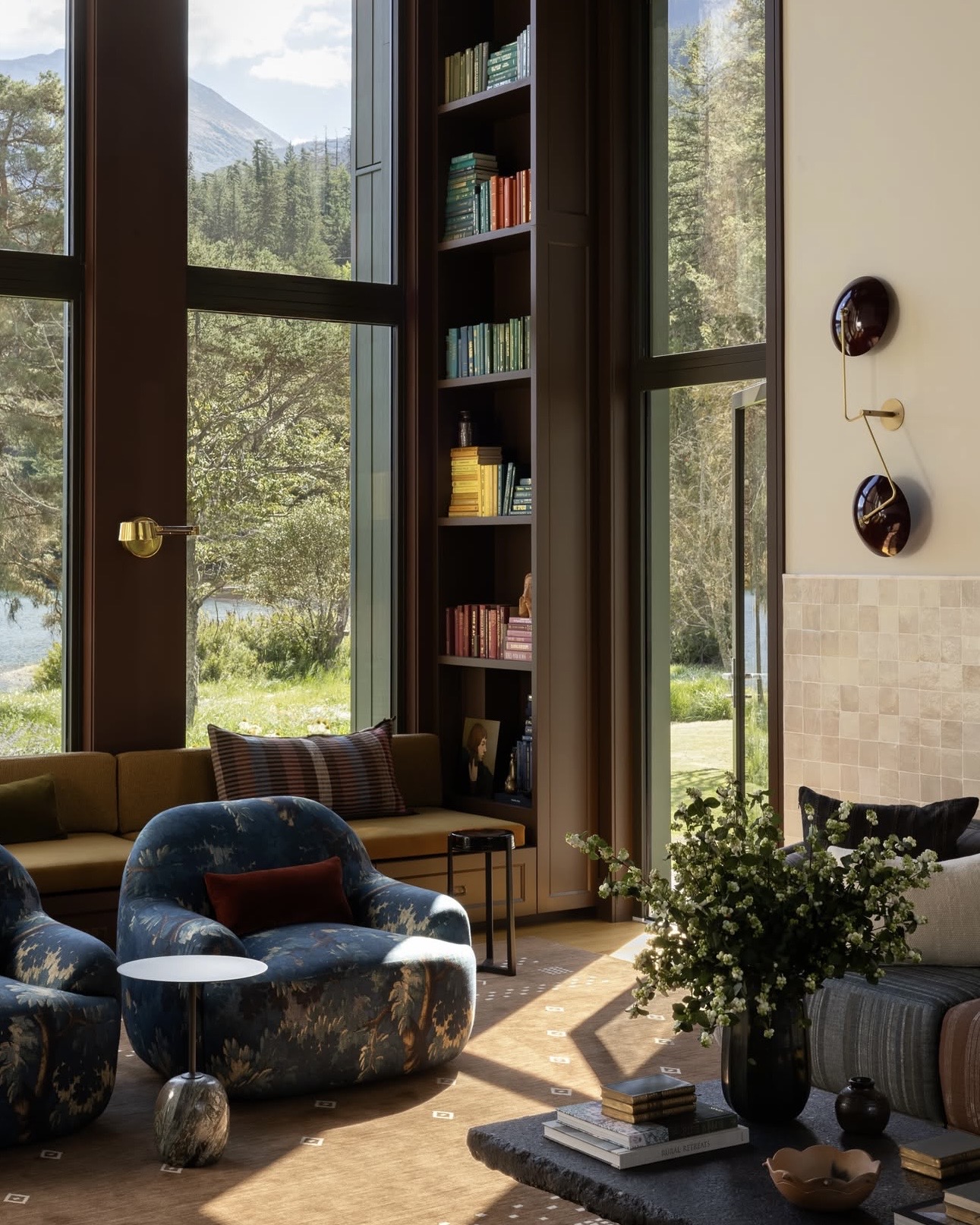
A space that beautifully scales down its immense verticality
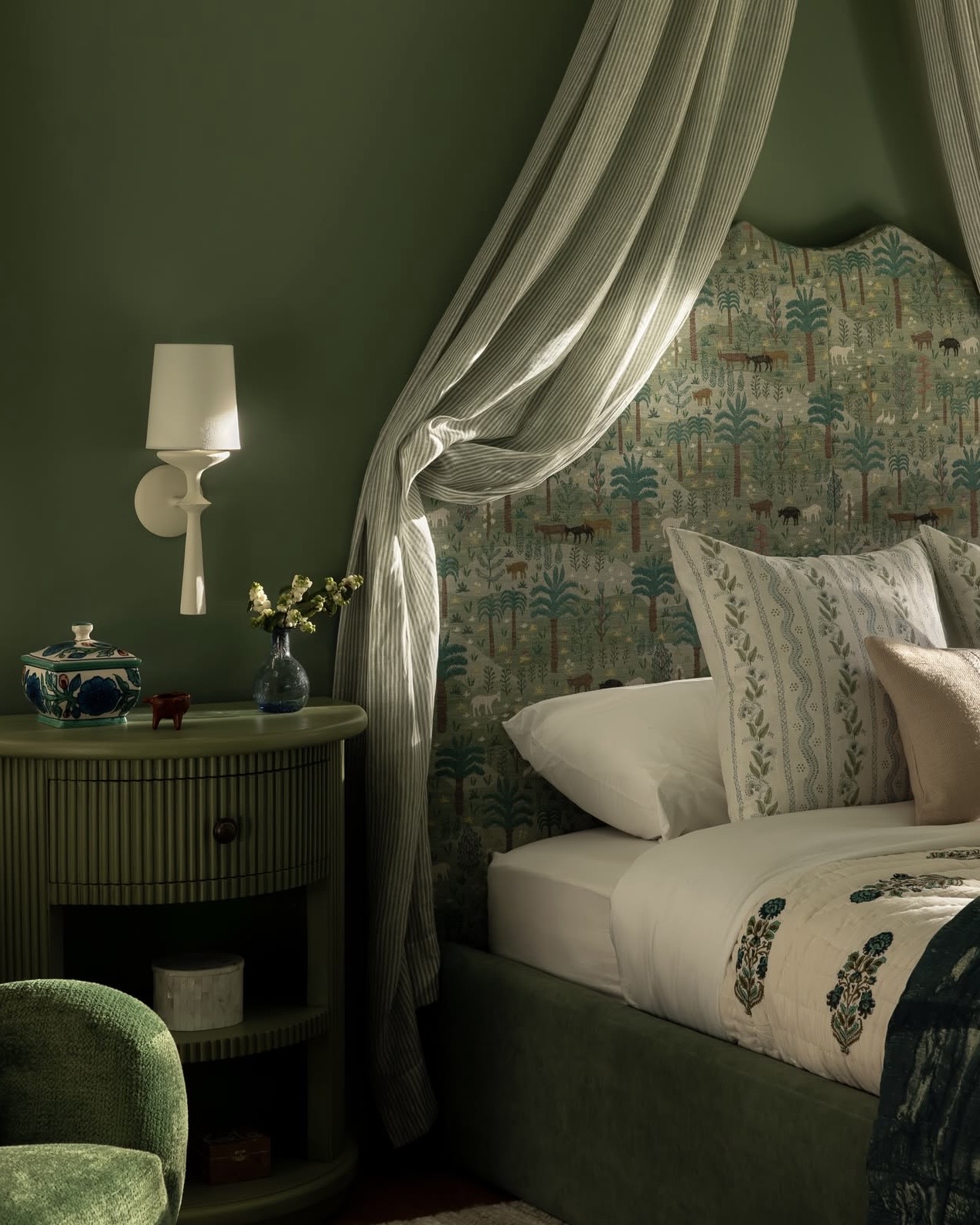
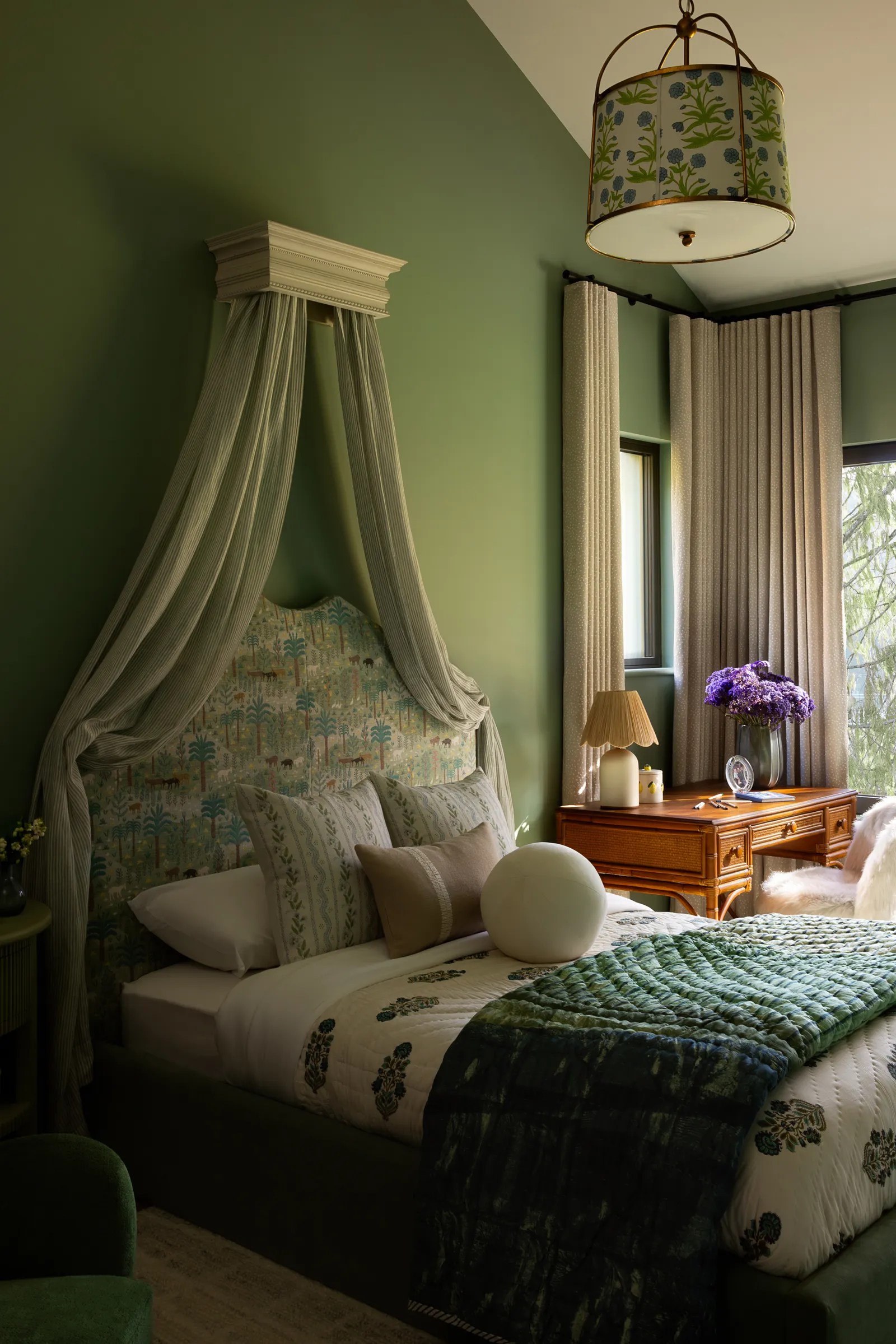
The daughter’s room leans heavily into a nostalgic, English-country-meets-alpine-cabin aesthetic
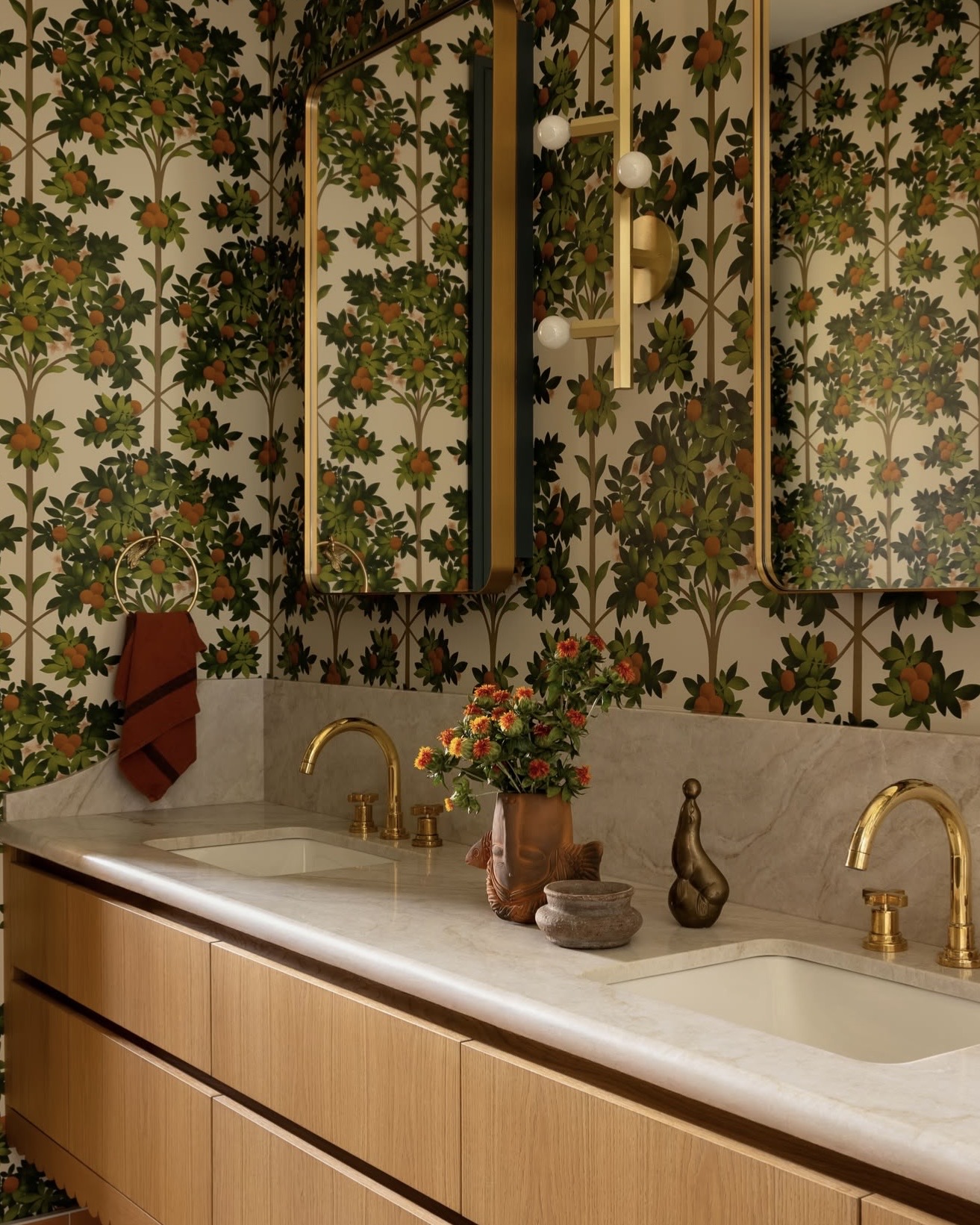
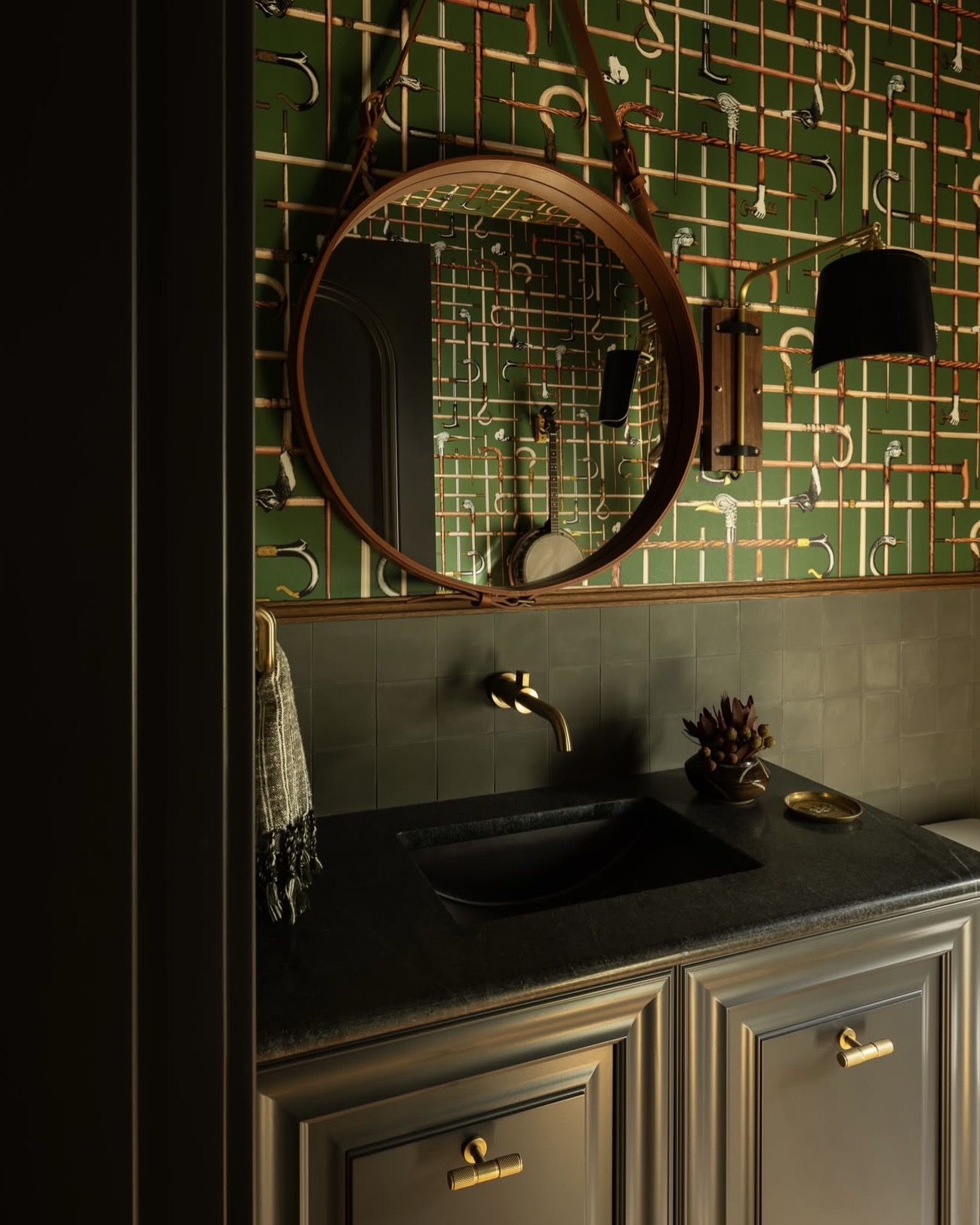
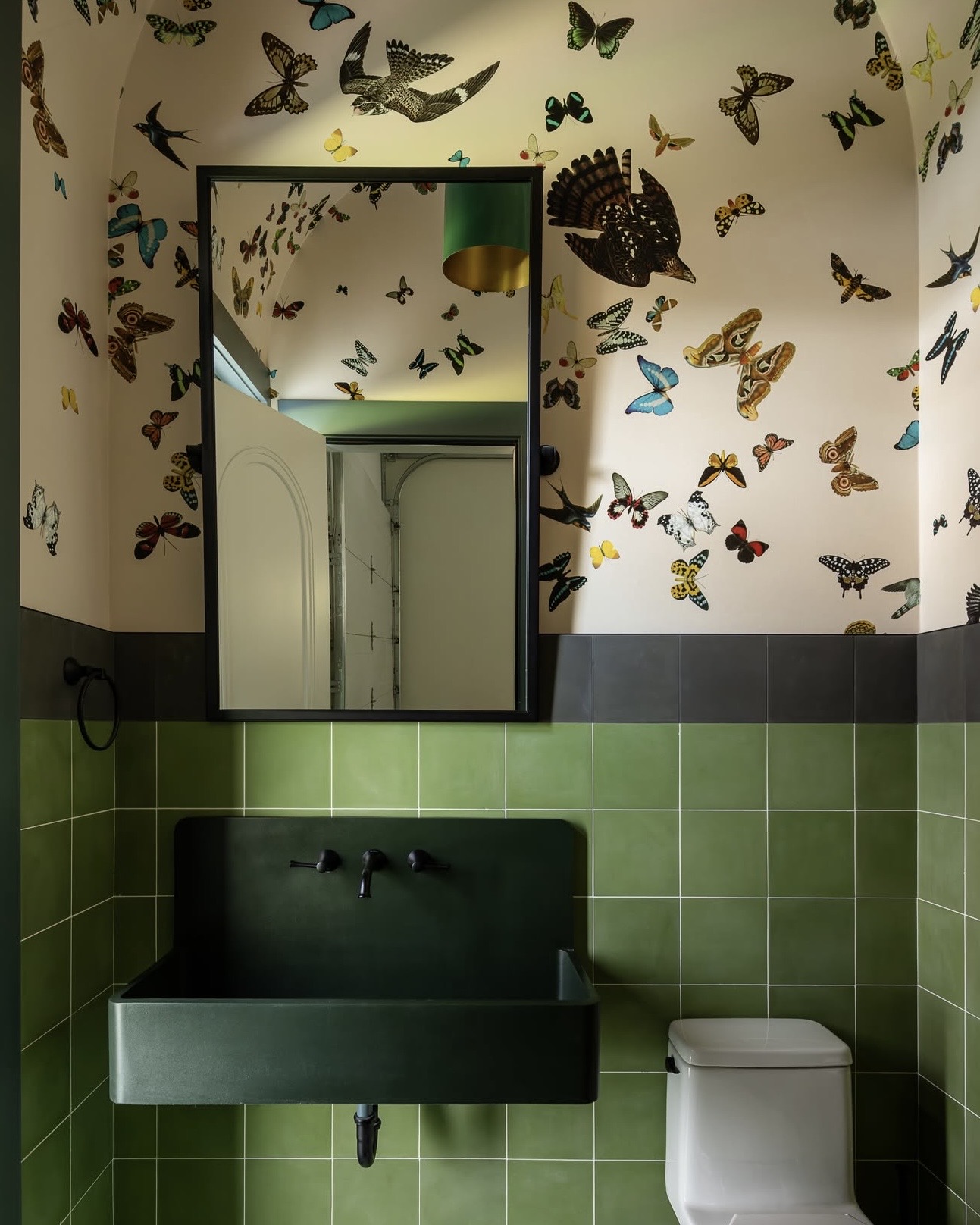
A high-impact “jewel box” powder room design with a whimsical old-world charm
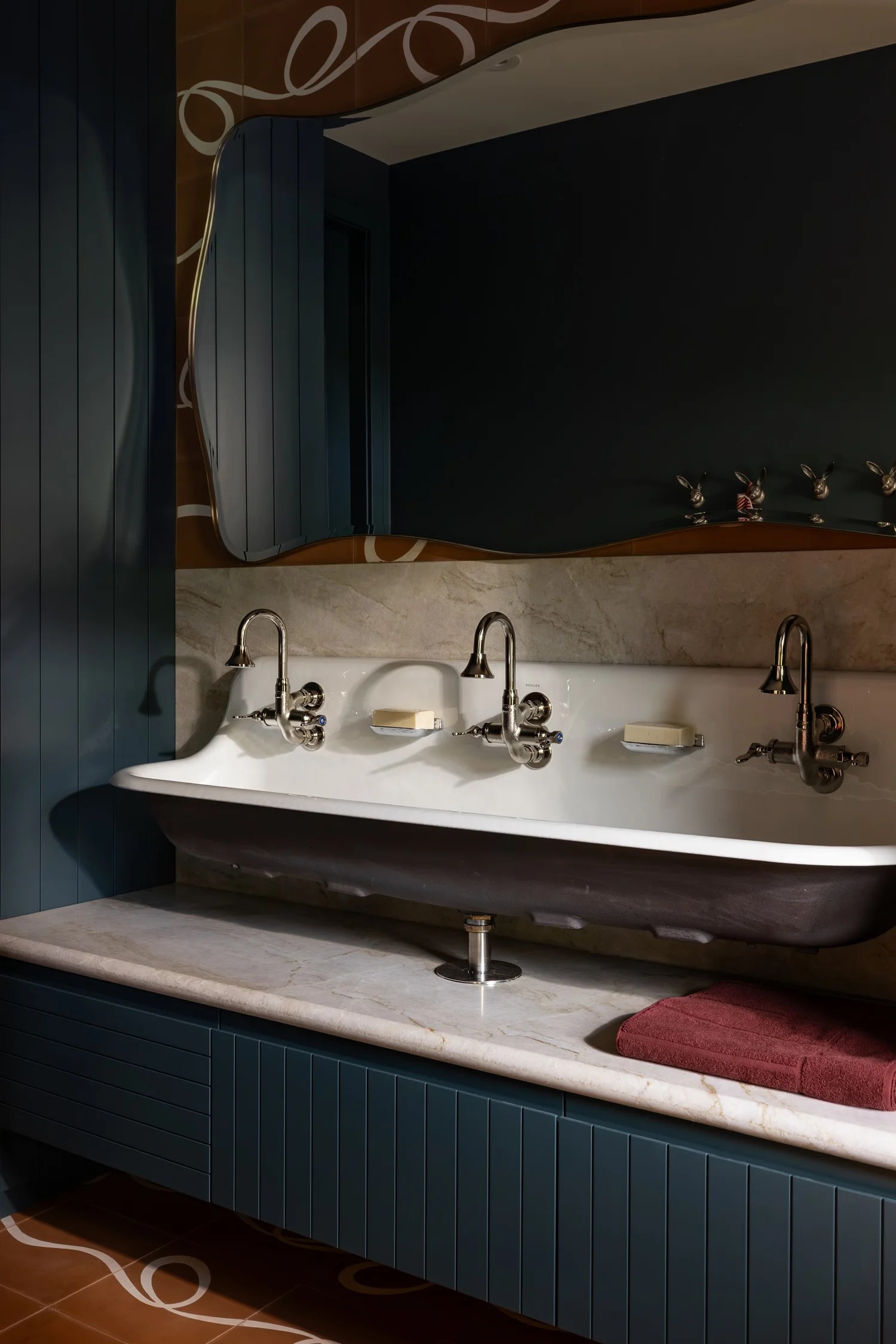
Elevated “camp” / schoolhouse aesthetic in this beautiful home that is designed to host
A Kitchen for Entertaining
The kitchen serves as the home’s emotional and functional core, designed to handle the logistics of a full house.
The Surfaces: Rich forest green cabinetry is juxtaposed with a towering backsplash of hand-molded, iridescent Zellige tiles that shimmer like the lake surface under natural light.
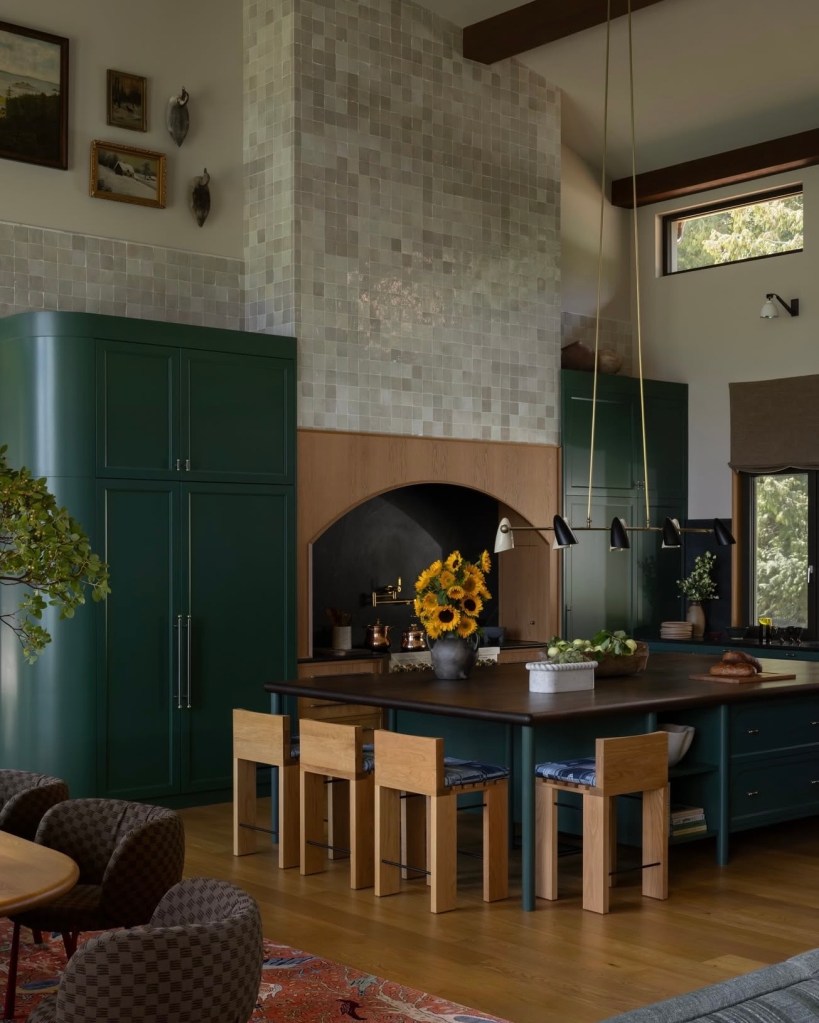
The Framing brings a soft, arched white oak alcove breaks up the straight lines of the custom millwork, offering a visual rest point above the range.
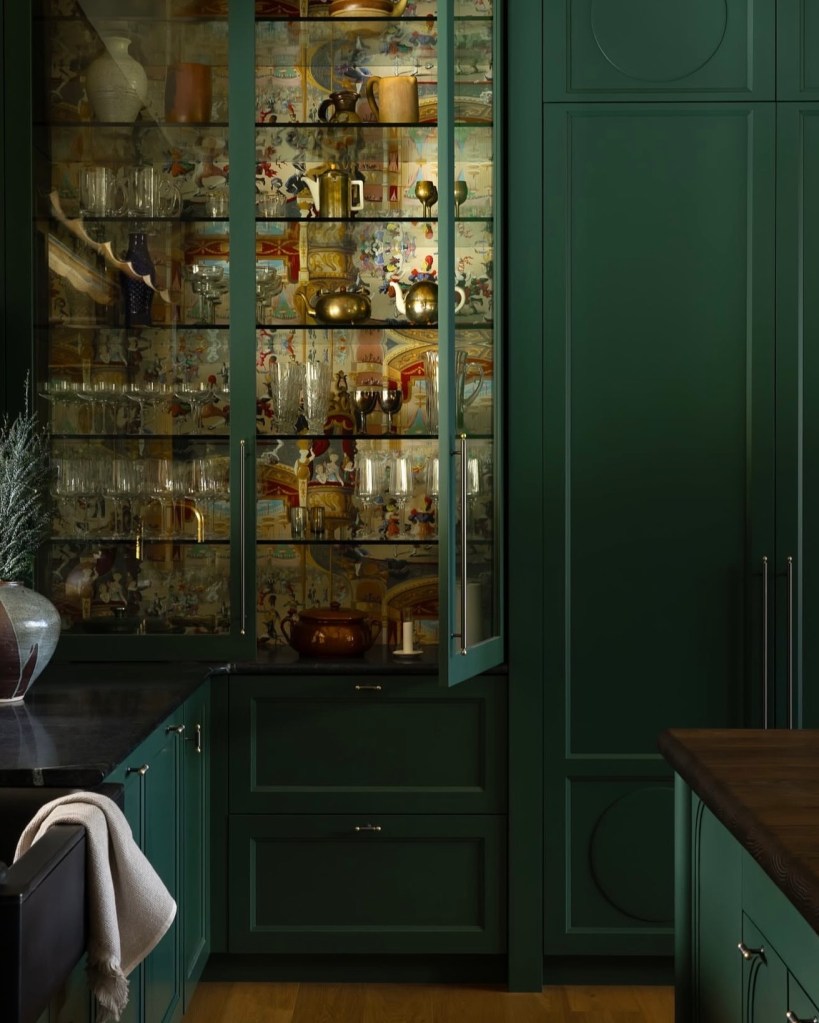
Concealed within the rich green kitchen cabinetry is a magnificent display cabinet lined with an ornate, multi-colored historical wallpaper
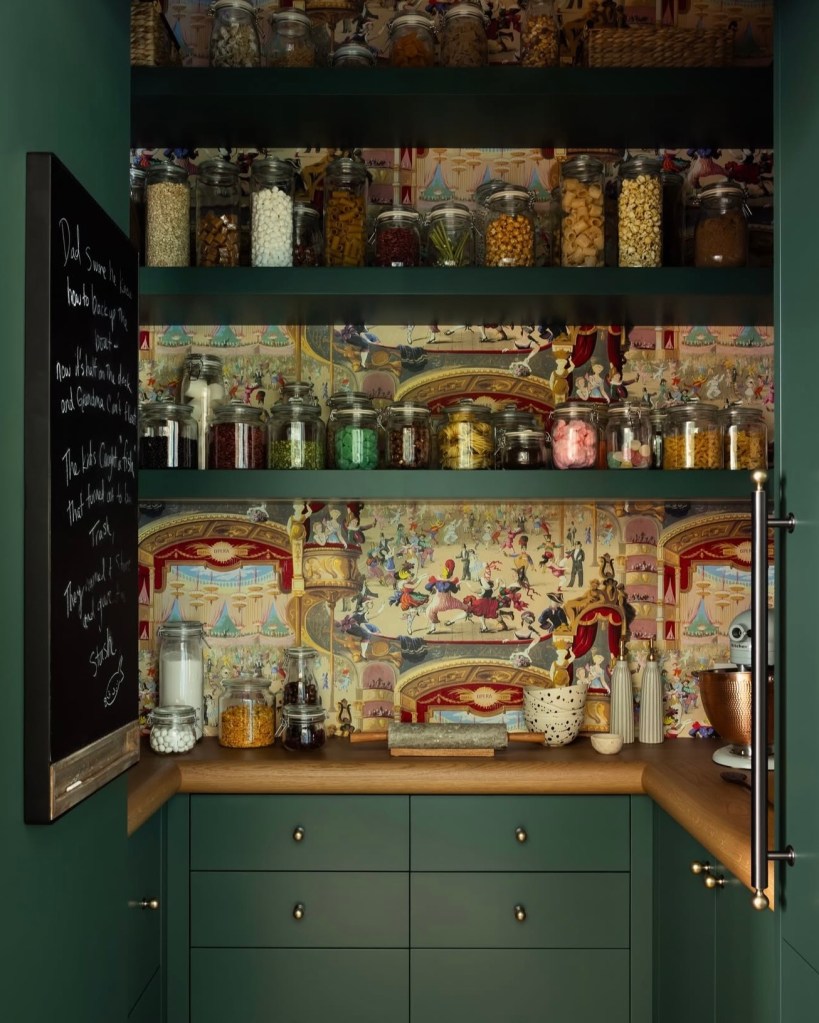
A clever detail that epitomizes the home’s ethos: clean, contemporary design on the outside, with a heart of whimsical maximalism on the inside
The Hidden Bar: Concealed behind the smooth green cabinet faces is a magnificent hidden bar and china display cabinet. Lined with an intricate, multi-hued historical wallpaper, it is a playful nod to Smulders’ love for unexpected narrative details.
Pattern Play and Moody Corners
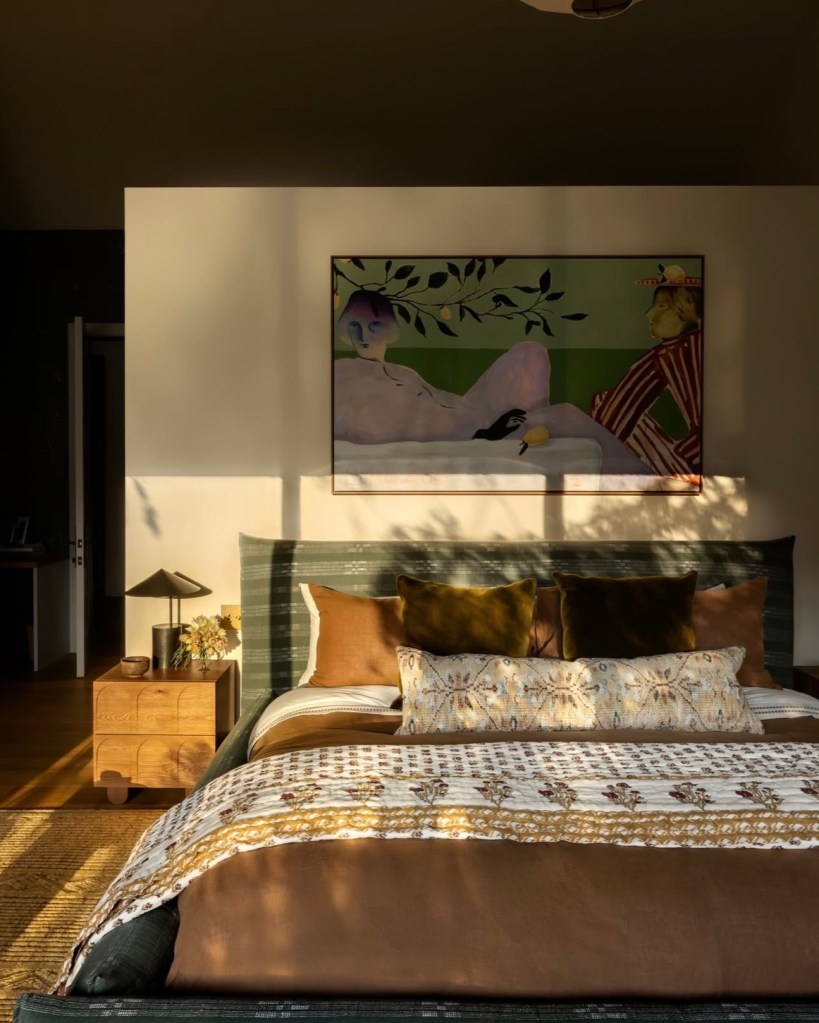
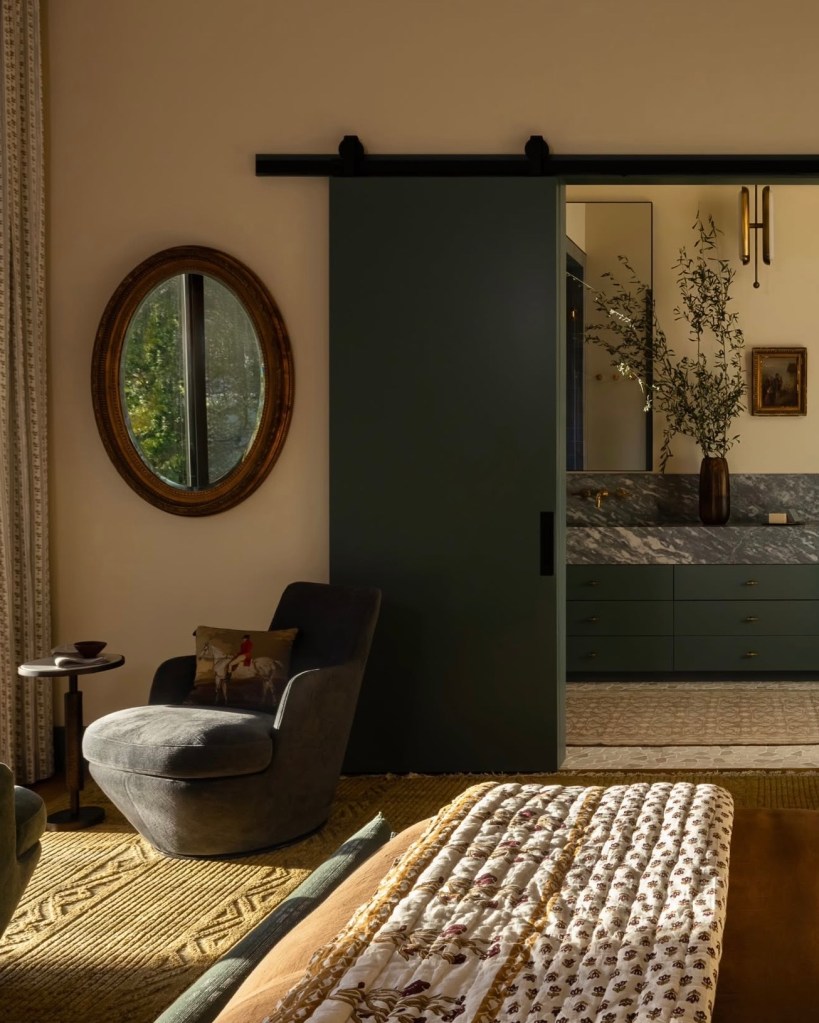
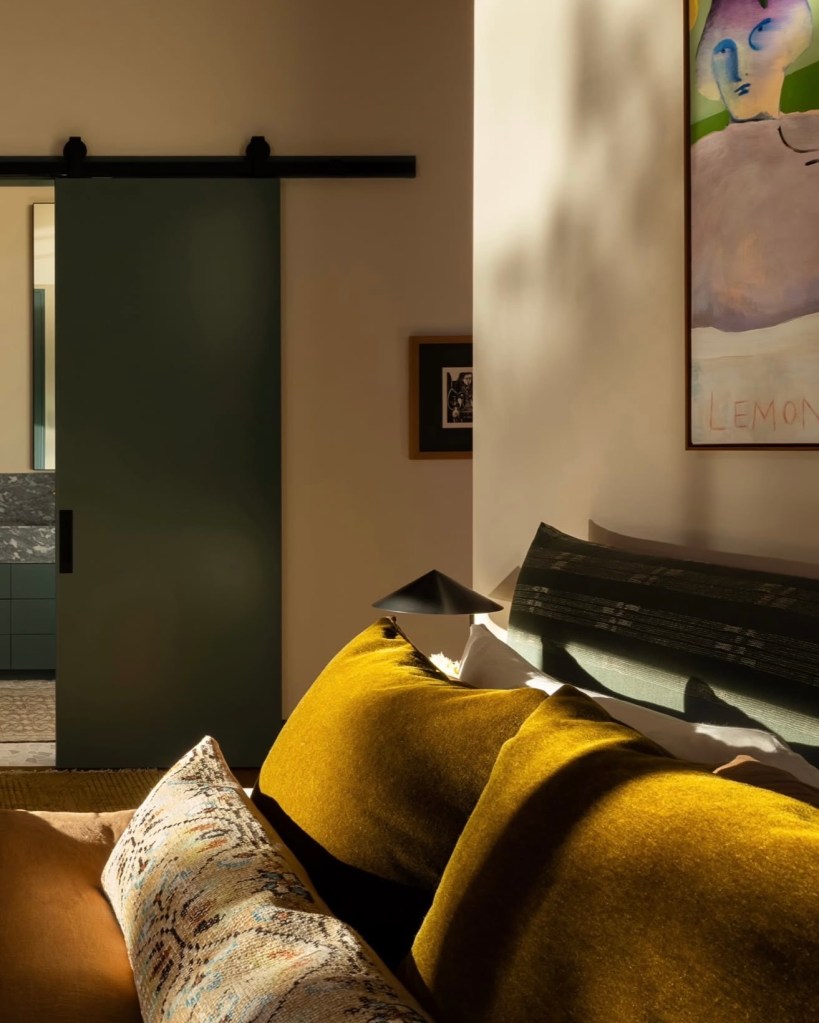
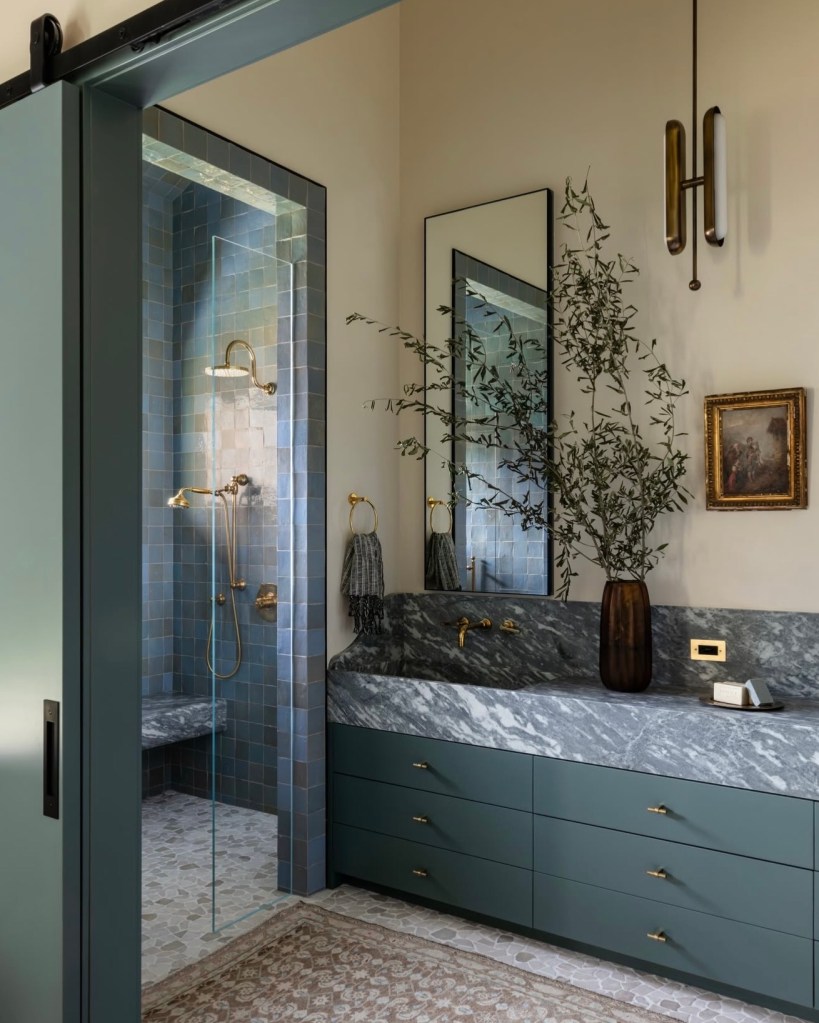
The master bedroom steps away from standard lakeside design, layering mustard-yellow velvets, deep ochre pillows, and chocolate brown linens against a custom, oversized woven headboard. The artwork above the bed—a dreamy, modern figurative painting—ties the organic color palette together flawlessly.
In the communal areas, furniture choices favor deep-seated comfort—featuring custom armchairs wrapped in dense, botanical tapestries that ground the airy architecture.
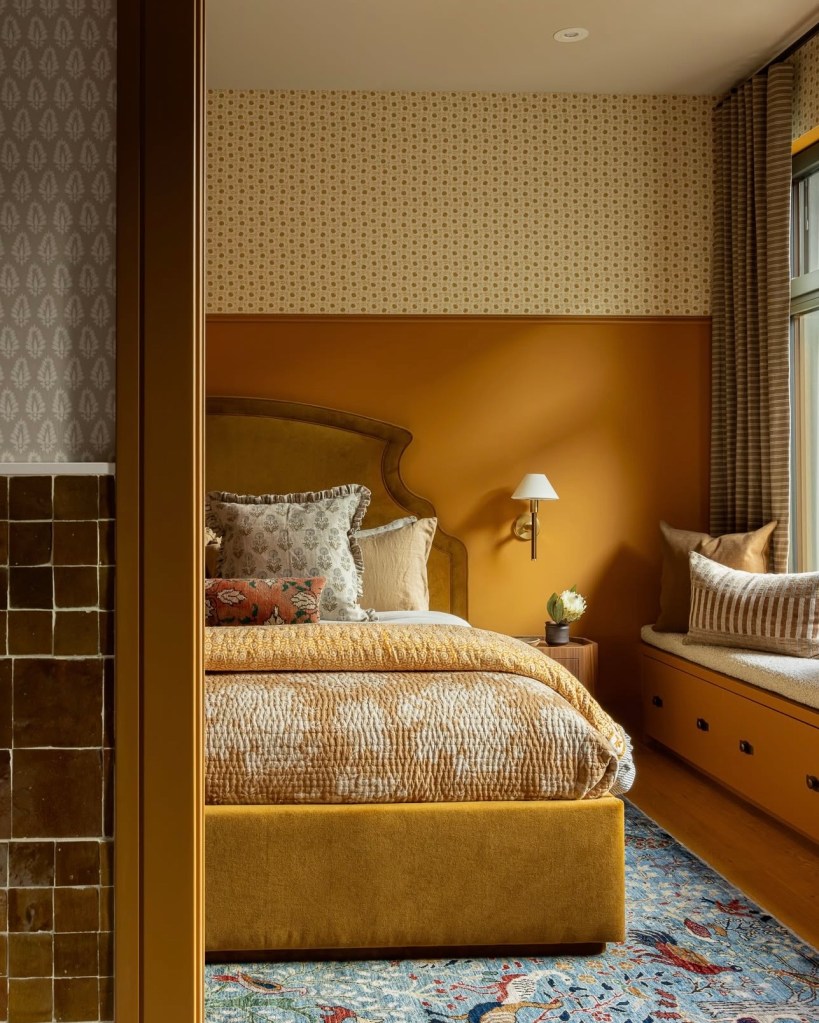
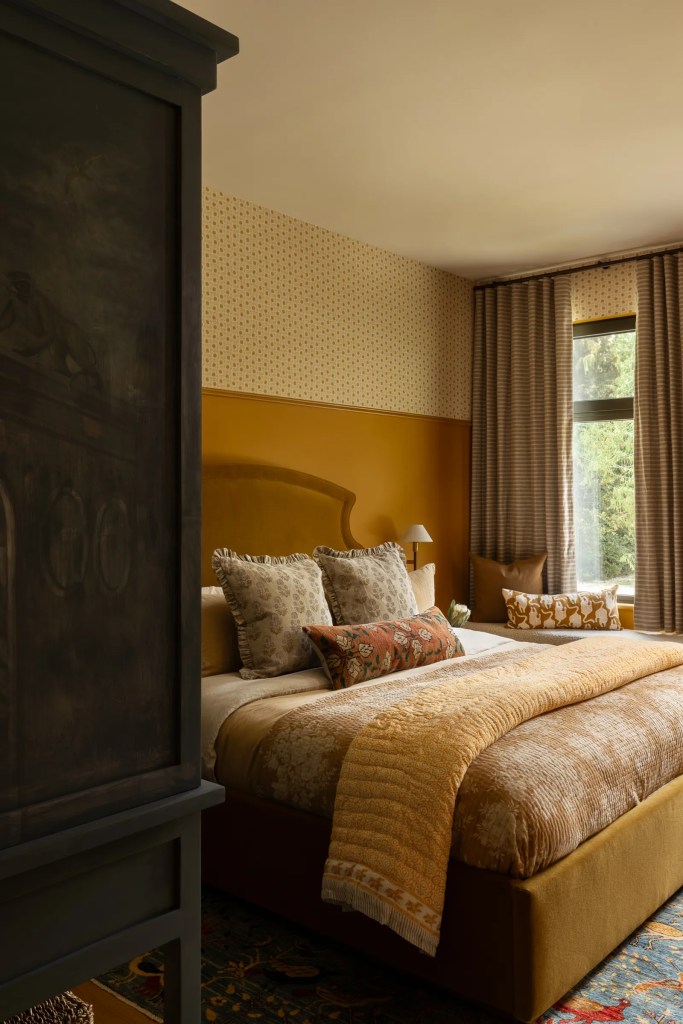
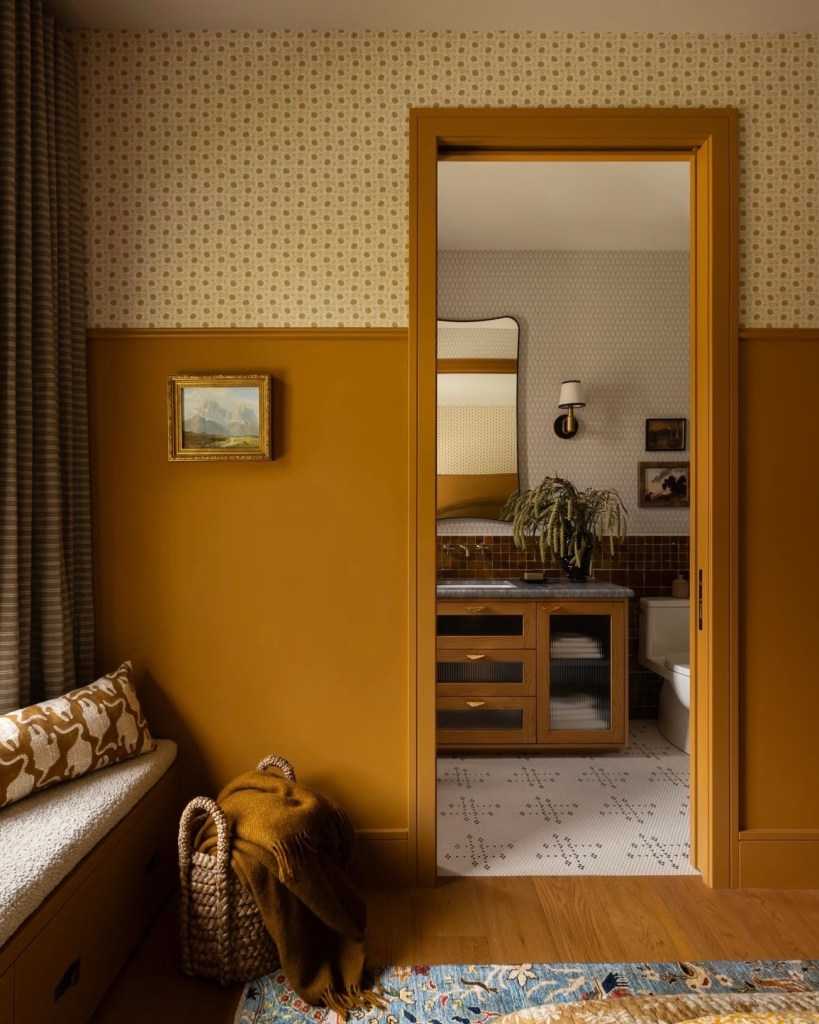
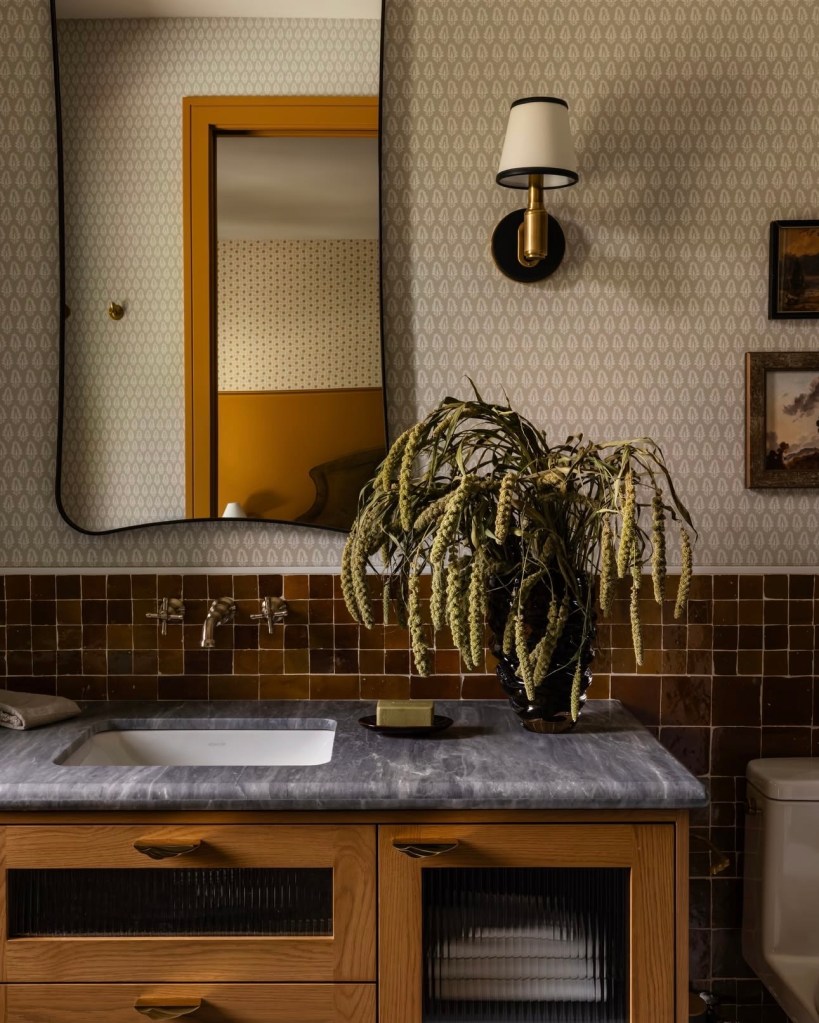
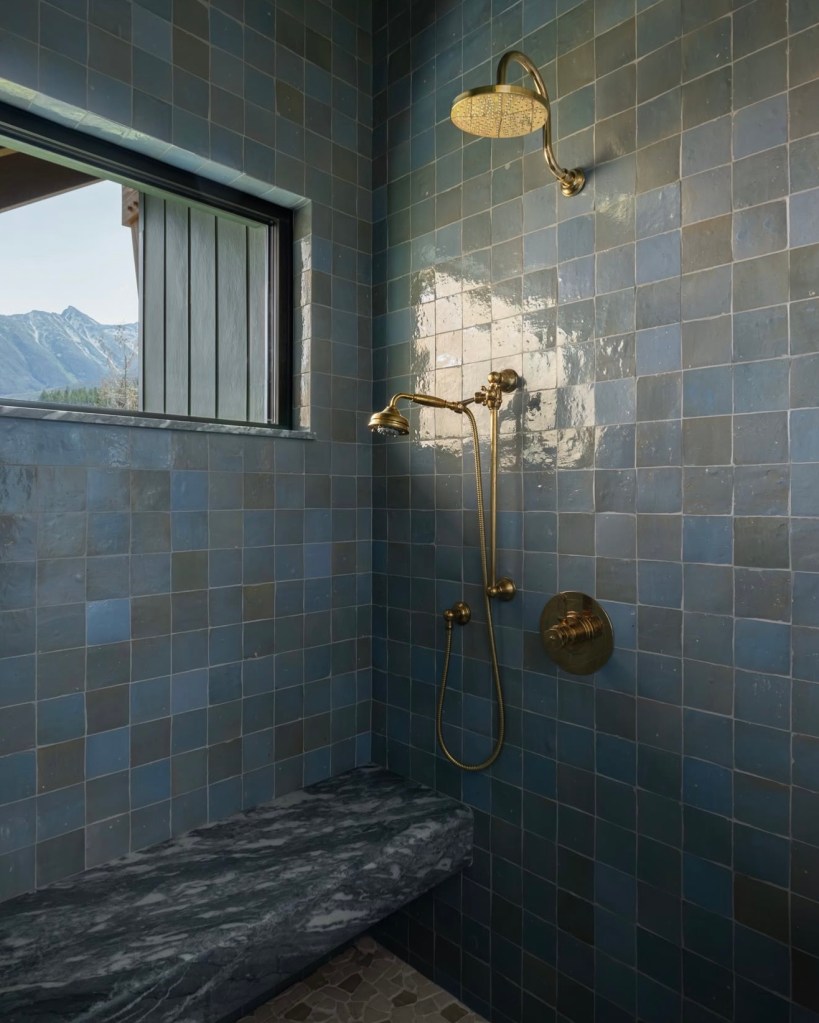
A masterclass in warm monochromatic layering, this guest room wraps the space in a rich mustard and ochre palette. The bedroom features walls divided by a crisp horizon line, pairing a solid golden-mustard lower half with a delicate geometric dotted wallpaper above, accented by a cozy built-in window daybed with integrated storage drawers. At the center is a custom upholstered bed frame, beautifully paired with a vintage wardrobe refinished by Leavitt. The design flows seamlessly into an en-suite bathroom through a matching mustard-trimmed doorway, where the golden color story transitions into earth-toned, glossy zellige tile, a softly veined grey marble vanity, a complementary leaf-patterned wallpaper, and classic mosaic floor tiling
Merging with the Wilderness
Ultimately, the architecture is a framework for observing the environment. The massive, floor-to-ceiling glass curtain walls dissolve the boundary between the open-concept living spaces and the unpredictable Canadian elements outside.
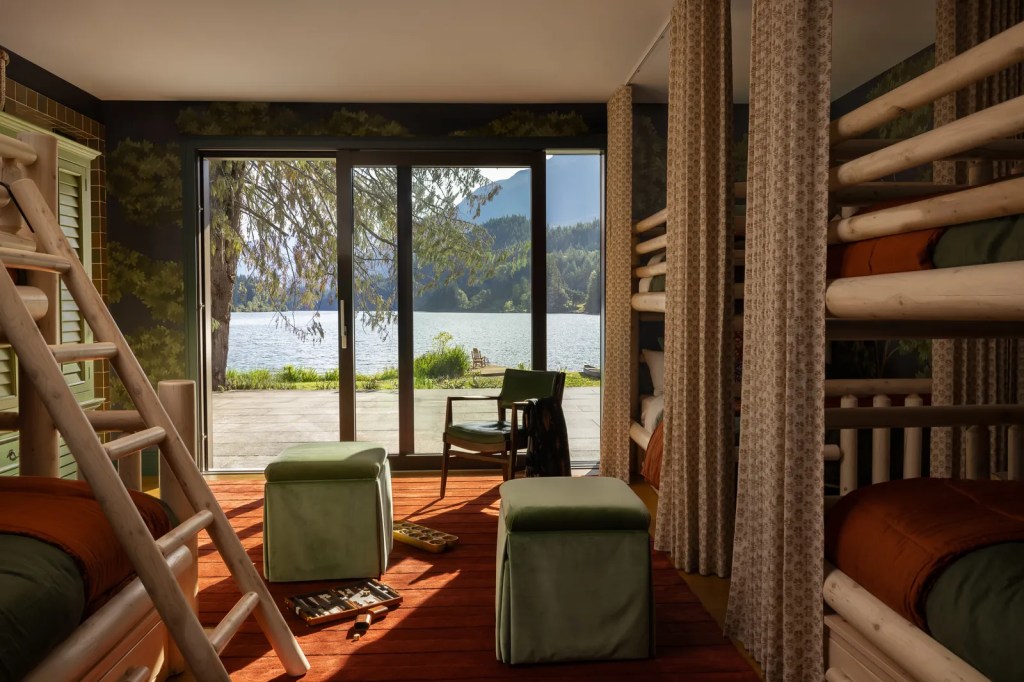
The bunk room is arguably the most playful architectural feat in the cabin, designed to sleep an influx of friends and family effortlessly
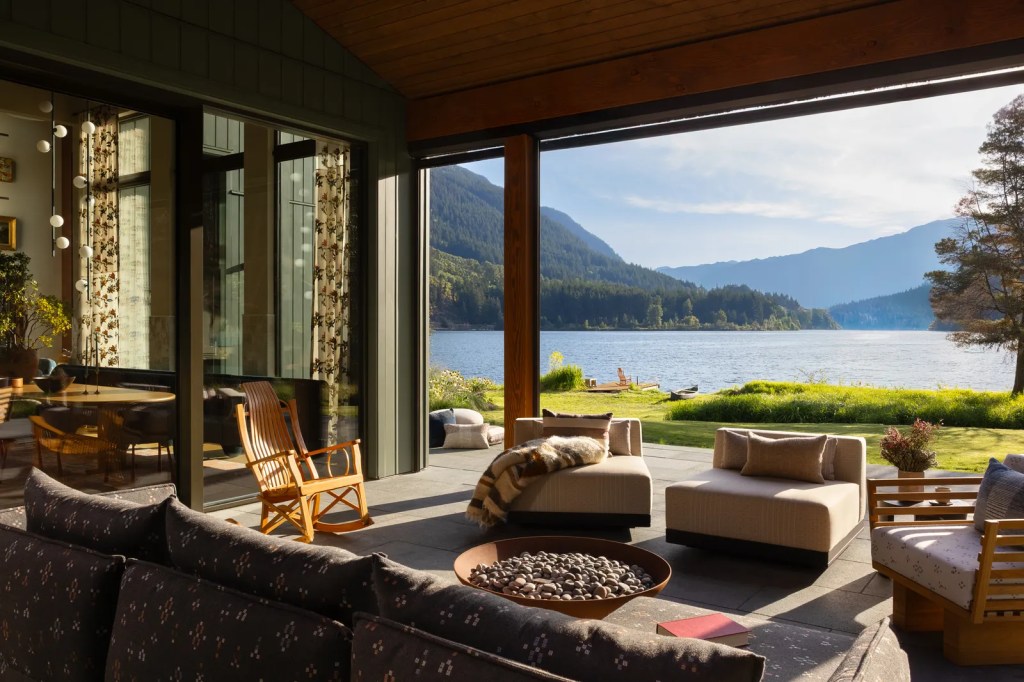
The patio blurs the threshold between the interior and exterior. Low-profile, plush lounge chairs face a wide, rusted steel fire bowl filled with river stones. The stone tile flooring runs seamlessly outward toward a grassy lawn and a private dock, treating the surrounding wilderness as the home’s final design layer
The stone-tiled patio exterior flows effortlessly down to a private shoreline, where an outdoor lounge centers around a weathered, rusted steel fire bowl filled with river stones. Whether viewed from the warmth of the hearth inside or experienced down at the dock with a canoe at the water’s edge, this project stands as a brilliant testament to how modern Canadian design can be simultaneously grand, deeply personal, and inherently hospitable.
PlaidFox Studio says,
“Tucked away where the mountains meet the water’s edge, The Lakehouse is a breathtaking realization of a soulful family retreat. The architecture effortlessly frames the raw, untamed beauty of the British Columbia wilderness, using soaring ceilings and sweeping, floor to ceiling windows to invite the forest and tides right inside. This is not just a home; it is an immersive experience where the grandeur of nature meets an eclectic, design-forward interior.
Inside, an unexpected and thrilling design narrative unfolds. We leaned into a concept we lovingly call “modern-mountain-chalet-meets-English-farmhouse”, balancing clean, contemporary lines with a rich, nostalgic warmth.
By layering sleek, matte surfaces with rugged, tactile elements, The Lakehouse stands as a vibrant, inspiring sanctuary that proves high end design can be both wonderfully grand and beautifully whimsical.”
What aspect of Cobie Smulders’ lakeside design stands out most to you? Let us know your thoughts in the comments, and subscribe to the AH Journal newsletter for more.

Leave a comment